Showing posts with label Reel Weather. Show all posts

Sunday, October 5, 2014

Reel Weather visit NYPENN Girl Scouts of America Amahami Festival.

Never let anyone tell you that our future is in jeopardy when referencing our youth.


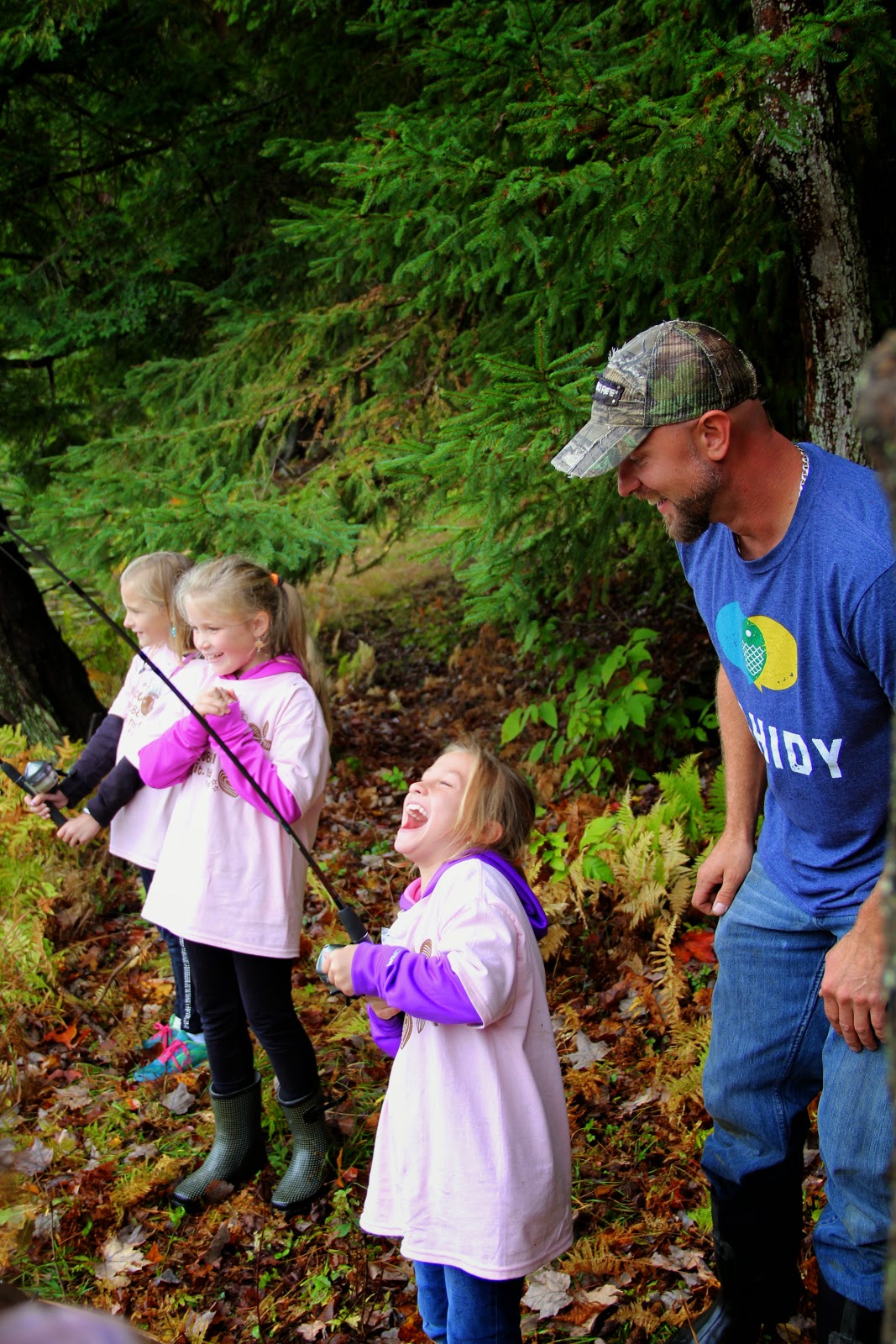
This weekend I had the absolute privilege of attending the NYPENN Girl Scouts of America's Amahami Festival as a presenter on weather, fishing, and environmental stewardship.  Despite the cooler weather and early rain showers, over 200 people turned out to participate, making it the largest attended in the history of Amahami.  Being that this was my first time ever attending an event with the Girl Scouts, I had no idea what to expect.  Thankfully I had the help of fellow anglers John Malzahn and his son Michael, Dan Drake, and Dominic Sergi.  Together, these guys all did an amazing job of helping me bring Reel Weather to Deposit NY.

Who loves Weather Underground?

We began with one group of about 15 young girls.  To start we spoke about the importance of taking care of our environment, keeping our lakes, rivers, and forests free from pollution.  Then I talked about the most basic ways that weather impacts fishing, and why that's valuable, while showing my personal weather station.  I then moved to our lure selection for the day, which consisted of wacky hooks from Lazer Trokar, and Gary Yamamoto Senkos, with a demonstration on how to use this application and why it works.  After that we broke into four groups, and Dominic, Dan, John, Michael, and myself spread out across the lake to apply what we had just learned.

In no time the girls were catching fish, and all across the lake you could hear the sound of them screaming for joy.  For many, these are the first fish they've ever caught, and the first wild fish they've ever seen.  They're learning how to touch them properly, how to release them, how old they are, and why it's important to practice catch and release.  For example, a largemouth bass in NY that weighs over 5 pounds will get people's attention.  It's what's considered by those who fish a lot to be a "good fish".  That fish would be over 10 years old.  Being that bass aren't generally considered to be a delicacy, there are more reasons to keep them alive than to harvest them.


When we got back to our station and said farewell to our first group, we learned we had three more groups waiting.  By 2 we had over 50 kids fishing on the shore at once, having spent all day with over 150 young girls.  These wonderful kids were the most respective, attentive, and polite I'd ever worked with.  They were all environmentally conscious before we even began, and it was so refreshing to see and hear so many kids understand the importance of protecting our resources.  It was a testament to the NYPENN Girl Scouts of America, and to the parents of those kids, who are largely responsible for having raised such wonderful girls.  By all accounts, we were a huge hit there, and I hope that they invite us back.  Thanks again to all my friends for helping, and to Trokar, Dobyns, Fishidy, and Weather Underground.


Monday, September 8, 2014

Get the lead out!

5 reasons why Tungsten sinkers are better for YOU!

I remember when I heard that New York State was banning lead sinkers.  At first I thought nothing of it, but I quickly had a heart attack when I saw the price of Tungsten.  I thought it was going to mean the end of my worm fishing days!  I couldn't see a benefit, and I didn't know all the environmental hazards associated with lead that had prompted that legislation.  That 2002, over ten years ago, and since then we've all come to know the harm that lead and lead production can cause.  But do you know the benefits to Tungsten?

1.  Size Matters

Tungsten weights are generally comprised of 70% to 97% tungsten, an element much harder, denser, and heavier than lead.  For the sake of this article, I'm going to be focusing on weights made by Elite Tungsten, a company that produces only 97% weights.  This composition is significant because it allows anglers to use a smaller profile weight, thereby reducing hangups and eliminating costly time spent having to free your line.  When compared to lead, the size of tungsten is much smaller, which will mean having a more realistic presentation of your bait by not having a two inch sinker in front.  While that advantage might seem minimal at best on a farm pond, fish that get pounded on lakes like Hartwell, Douglas, or Smith Mountain can be easily turned off by abnormalities like that.  

2.  A Diamond In The Rough

Elite Tungsten weights are bored with a diamond drill bit, the only company to do so, eliminating the need for inserts that other companies need to prevent chafing of your line.  Being insert-free and smooth allows you to use a lighter line without fear of having it broken by your sinker, translating to fewer rigs breaking off.  The smaller line diameter can frequently lead to increased numbers of fish in your boat, especially in waters that are heavily fished or that have high visibility (very clear water).  Catching more fish is always a good thing.

3.  Sounds Good To Me

Being denser and harder than lead creates more sound.  While there's no clear data to suggest how many strikes are generated as a result of sound alone, it is certainly a contributing factor.  Tungsten can also deliver improved vibration to your hand, allowing you to better determine bottom composition which can be key to finding big fish!  For example, when bass are keying on crawfish, being able to find those rocky areas that are intermixed with grass in deeper water is often done only by being able to feel it in your rod.  My buddy Brian Campbell will often say "God it feels good down there" when referring to a little outcrop of small rocks on the bottom.  It's not enough to be in an area that's 20 yards wide, you need to know where in that area are the smaller 3 foot by 3 foot subsections of rock that are there.  Those are the areas that the fish are holding tight to.

4.  Don't Drink The Water

Lead is bad.  We know that now.  It's bad in our drinking water, it's bad to produce, it's just bad.  While Tungsten is more expensive, it's a small price to pay now to have a better environment later.  Waiting too long could lead to damage that is far greater financially, say nothing of what lead poisoning could do to the fish.  Our lakes and rivers are not dumps, and we have the ability to do better than we did in the past.  Doesn't that obligate us, as anglers?

5.  You'll Catch More Fish

That's the ultimate goal, is it not?  Not just catch fish, but catch A LOT of fish.  If this weight can help you lose fewer baits via snags, retie less often, have your lure in the water MORE often, help you feel more of the bottom and feel more bites, not chafe your line thereby preventing breaks while fighting fish or snags, AND do a little bit to help protect the future of the sport we love so much, why wouldn't you try it?  

Tuesday, September 2, 2014

How's the weather in your livewell?

I just got back from a tournament at Oneida Lake, my first after having installed my new V-T2 Livewell system from New Pro Products.  This unique system is designed to improve the overall quality of your livewell both when it's holding fish and when it is not.  If you're like me, you probably had no idea what was happening in there.  You add water, recirculate it from time to time, make sure the aerator is working, keep a bottle of Rejuvenate on hand, and have been told to keep ice on your fish when it is really hot.  Stop right there, and listen to what I'm going to tell you because that kind of behavior is actually harming your fish.

Click here to read the rest, you can also read the rest of my blog Reel Weather at Weather Underground at http://www.wunderground.com/blog/JimRoot/show.html.


Friday, August 15, 2014

Sunday, July 20, 2014

Reel Weather: Hot fishing, sizzling products, and Wild Bill Wichrowski!

If you live above the Mason-Dixon line you're either enjoying some of the best fishing you've seen in years, or you're missing out on it! The current temperatures and moon phase is producing a feeding frenzy of both Large and Smallmouth bass. Temperatures have been moderate and slightly cooler at night. While the moon phase has fish targeting crawfish and feeding so heavily on them, you can actually see fish regurgitate them when they're being reeled in or after they've been in your livewell. This is a great time to throw tubes, jigs, and soft plastic craws. You should use mixed colors like black and blue or Alabama Craw, to imitate the kind of transition that they've been going through since the full moon on the 13th. 

Click Here to read the rest!


Monday, July 14, 2014

Summertime Smallies!

For people from the North, smallmouth fishing is a way of life. Big Lakes with big waves, producing legendary bronzebacks. These fish routinely come completely out of the water while being reeled in, and often the fiercest action doesn't begin until they've seen the boat. If you haven't had the opportunity to experience this for yourself, I highly recommend it. There are many bodies of water offering exquisite smallmouth fishing: Erie, Ontario, Simcoe, Cayuga, Susquehanna River, Champlain, St. Claire, St. Lawrence River, Pickwick, Smith Mountain, are just a few of the many options anglers can choose from when seeking big smallmouth bass. While you won't find these fish to reach the size of their greener cousins, smallmouth pound-for-pound have a reputation for packing twice the punch. There's no denying that. One thing that isn't debatable is that some of those lakes produce very nautical conditions that can be very dangerous. Weather Underground has wave conditions for those big lakes, and you should check them before going and heed the advice that's posted there when bad weather is predicted.

When the summer heats up, the bigger smallmouth move deep. Now deep is of course a relative term, and varies from lake to lake. Typically though, you'll be fishing in water that's over 25 feet, with techniques like drop shot, carolina rigging, tubes, cranking, etc. My two favorite presentations in this time of year are...

Click here to read the rest and visit wunderground.com for a full list of all my Reel Weather blog entries!


Sunday, June 29, 2014

Don't let cold fronts chill your bite!


We normally think of summer as hot, humid, and the cold fronts can be a thing of relief that we welcome. For bass anglers, these drops in temperature can be really demoralizing. When temps that have been hovering in the 90s suddenly drop over night to the 80s and below, this can have a dramatic impact on the bass in your home lake. This can be a really frustrating time, because it normally has meant a really intense feeding period leading up to this change. 

Click here to read the rest!

Sunday, June 22, 2014

Dog Days of Summer

Since I began writing this blog I've started to get emails from people asking me what I would do in certain climates or weather conditions, and asking if there are presentations other than the ones I've suggested that are also an option to someone who might not feel that what I've suggested is something that they're really comfortable doing. So with that in mind, this week I'm going to address a question that I received last week, and I'm going to have several of my friends offer their opinions as well.

To begin with, the hottest days of the year can be brutal for fishing. Sometimes it feels like there are two suns in the sky when you're faced with glaring reflections off the water. For many people, largemouth and smallmouth both can seem to just disappear this time of year, leaving you feeling burned by the sun and the fish. As I've said before, I don't like fishing docks. So I'm going to focus on other transitional areas and what I use to target them.


Tuesday, June 10, 2014

What Douglas Lake and my quest for the Elite Series in 2015 have in common.

What do The First B.A.S.S. Northern Open at Douglas Lake and my quest for the Elite Series in 2015 have in common?  They're over.  That's right.  What began with me catching a six pounder on my first day of practice, ended when I checked in on day one Thursday with my first zero I've ever had.  When I first arrived in Dandridge I was told "You're either gonna love this lake, or you're gonna hate it" and I can honestly say I felt both.

At the end of the day Tuesday I was nervously feeling over confident.  I had a huge school of big fish, I knew where they were hanging out, what time they ate, and how to catch them.  I only briefly checked on them Wednesday morning to make sure they were still there before taking my boat out at 11 am.  I say nervously because I had tournaments in the past where my great practices turned into horrible events and I had a lot riding on this one.  It was my first Open as a boater, and The Weather Channel was coming to film me at the weigh-in on Thursday, interview me after, and follow me all day Friday.

No pressure at all.


Day 1.

I have a really late boat draw, near 160 out of nearly 190.  From the very beginning I'm conflicted.  My big school is at the far back end of Muddy Creek.  I know other anglers saw me catch a 5 pounder there on Sunday, and while I know those fish won't eat until 9 or 9:30 am, I'm afraid that if I don't go there first thing, I will find someone else on it.  I might find someone on it anyhow.  I have other areas, but they're smaller fish, nothing I found in practice is like this area: caught two big ones, and saw one near 10 pounds not 40 yards away.  So I go there first, and I'm the only one there.

By noon we have nothing.  I can't find a fish on my graph.  It's a ghost town, both in terms of my fish and my confidence.  The one thing that has always been my strength, my perseverance, is but a memory, and I'm left with nothing but a growing fear that my worst nightmare will come true.  I run the lake, hitting almost every waypoint I have, and between the two of us we only catch two keeper largemouth.  And mine is on the edge.  I measure it 8 times, and 6 times it's short.  With an awful pain in my stomach I throw it back.  I go on a tear, and catch 8 fish on 9 casts, all of them four pounders, all of them smallmouth.

None of them big enough to keep.

True heartbreak has now taken over.

At the end of the day, I limp back to the dock with my first zero.  The Elite Series dream left another year away, yet again.  I know I'm better than that, and that I can compete at that level.  I was staying with Chris and Woo Daves while I was down there.  Chris said "You're gonna be real nervous when they film you.  My first ever Classic I rolled up to my first spot, camera on me, I dropped the trolling motor, turned around, and stepped right off the boat!"

So did I, in a sense.

When I looked back at the data from my personal weather station later that night I saw spike in temperature of about 7 degrees.  What I didn't expect was for that small increase to drive my fish out towards the main lake.  I learned a hard lesson, and knew that moving forward I would have to commit to fish that were already out of the creeks.  Those fish were already in their summer homes and would be less impacted by small increases like that.


Day 2.

I'm more relaxed than I've ever been.  I have nothing to lose.  I can only improve from Day 1.  I skip the big fish, and go run my points and secondary points.  My co-angler for the day is in good shape and I want him to do well.  Those memories of being in his shoes are still too fresh for me.  I spend more time talking to the camera than I do fishing, putting him in good position to hit points, docks, pontoons.  He has a decent limit and is culling fish by 9, an added bonus to being boat 59.  I decide to go check on my big fish, just because it's close to their lunch time if they in fact return, and if they do, they have the kind of weight that can change your tournament in a hurry.

And sure enough, they're there.


But so are thousands of gizzard shad.  Big gizzard shad, some of them look like they would almost keep.  The water is boiling all around us, and I have never seen anything like it.  I've seen smallmouth on Oneida crush shad at the surface, but those are small, tiny in comparison.  These shad are huge, and the fish busting them are giants.  I manage a straggler off a point that's 2 pounds.  Nothing else touches anything we throw at them.  That's the pain of shad that big and in that size school:  bass have more than enough food and will rarely eat your lures.  The cameraman, producer, and boat operator are in awe, it's an amazing sight to behold, and it brings me a strange peace to know that I was right all along, and had found winning fish.

We run to a few more spots, all produce mediocre fish, and decide to finish the day near Shady Grove, where I lose one of my biggest fish of the week on my last cast, two feet from the boat.

I remember watching that fish slowly fade into the darkness, as if even she couldn't believe that she'd gotten away, and thinking to myself This whole week will end just like that:  where I was on the verge of accomplishing my life's dream, but had to watch it slowly slip away.

Just one more year.  I can handle that.  Until then, I'll be swinging for the fences at the next two opens.  With water that's much more my style, where brownfish that weigh 4 pounds cash checks, and where I'll better understand the data from my weather station.


Wednesday, June 4, 2014

Sunday, May 4, 2014

The Pressure Anglers Thrive On!

The Pressure Anglers Thrive On!

Understanding Barometric pressure key to patterning big bass
Recently I was having a discussion with my friends Gary Dobyns, Mike Barone, and Goodyear Pro John McGoey about the significance, or lack thereof, in the relationship between barometric pressure and bass fishing. In 2004 I began journaling my fishing trips, and trying to gather as much data from the internet as I could find. Frontal systems, wind direction, moon phase, etc. Among those conditions I found research that suggested that the ideal barometric pressure for bass was roughly 28.5-30.1. In the ten years of data that I’ve collected, the most significant correlation that I could see between feeding activity and weather was when the barometer was falling from 30-29. That’s hard evidence, from over 150 total entries, with all data from that period provided by Weather Underground.

Pretty indisputable if you ask me…

At first I was amazed. The amount of fish I caught during those sweet spots was too significant to deny. Not to mention the size of the fish was just incredible. The more I began to study that and understand it, the more I could start to manipulate my tactics to support the conditions that I was in. Let me explain: barometric rises and falls with the presence of high or low pressure systems. How fast it falls and how much tends to vary from one system to another. Now for the past 10 years, there was not a single weather website I could find that was trying to predict this condition. That would leave me to have to use the hourly forecast to predict when the storm would arrive, and monitor the current conditions at wunderground.com (I’m going back to the days of pre-smartphone apps). While the pressure was high I would finesse fish: shaky heads, drop shot, small spinnerbaits, Texas-rigged soft plastics, etc. As soon as I saw the pressure start to fall I’d switch to reaction baits, and target big bites. I can’t tell you how often this allowed me to do well all day, rather than wondering why my fish “shut down” or stopped eating what had seemed to work all day long.

There are a lot of people, especially when you’re referencing deep water fishing (25 feet and deeper), that will tell you bp plays absolutely no part what you catch. While I won’t agree on that, I will say that the fish that are located deeper than 20 feet, in my experience, have proven to be impacted by pressure less than fish in 5 feet or less, but that comparison is really skewed from the very beginning for several reasons. For the most part, largemouth bass don’t typically live in water over 20 feet for prolonged periods of time in the summer months. Any fish that’s caught 20 feet or deeper is already subjected to pressure far greater than shallow fish of the same species. From my own experience, smallmouth are the fish that I’m catching in water deeper than 20 feet, and they’re always better about eating than largemouth anyhow. So naturally you might not see trends as significant in those brown fish in comparison to their green cousins.

As I said, for the past 10 years nobody was predicting barometric pressure. Was being the key word in that sentence. With the conversion to their new website platform, Weather Underground now has a completely customizable graph that will show you the 10 day or hourly forecast that includes chance of precipitation, wind direction and speed, humidity, cloud cover, dew point, and…barometric pressure. So now I can make a note to myself that I’ll expect my best fishing times to be between this time and that time, and allow myself to have a really solid game plan before I launch. Now to be fair, I’m not saying this will make you the next KVD. But it has certainly helped me catch more and bigger bass.

Sunday, April 20, 2014

It pays to love a jerk!

After a long cold winter in the Northeastern United States the ice is finally melting off most of the lakes in New York, Connecticut, Vermont, Maine, and New Hampshire. With temperatures climbing near 80 on some sunny afternoons, it can be a great time to get on the water. But go too early in the morning, and the cool 30 degree air will quickly remind you that it's still early spring. Bass are still deep. It'll be another month at the least before they begin the spawning process (breeding season). For now, the water remains in the 40s, but despite the cold water this can be a tremendous time to catch cold-water bass on jerkbaits.
Click here to read the rest!


Sunday, March 23, 2014

The Roots of a Fishing Journal


There's a guy I know who told me long ago "Rooty, you're a good hunter, but if you wanna be a great hunter, you need to start keeping a journal". He was right. But I had no idea just how right he was until I began using that for tracking data that has been a crucial part of my fishing toolkit that I have managed to fine tune so that it only takes me about 10 minutes to complete after each fishing trip.

The main things I track are temperature, moon phase, wind speed, water temperature, water clarity, barometric pressure, time of year, time of day, amount of fish, what I caught them on, and where I caught them. This requires me to use a variety of different programs and save them all in one place. I use the Navionics App and Notes program on my iPhone 5, Microsoft Excel to store it, Microsoft Paint to edit images, and I get all my weather information from Weather Underground (www.wunderground.com). The reason why I like WU is because it shows me a lot of the information that I want in these graphs below (this is from 9/11/13 in Syracuse NY). You can see that it not only shows real time data, but also what the normal high and low is as well.


I take this photo, which you can see in the history of any weather station here, save it to my computer, open it in Paint, and then I begin marking along the barometric pressure line with my system of colors and numbers and symbols to identify what I caught, how I caught it, and how big or how many. I post in green for largemouth, brown for smallmouth, blue for spotted bass. I don't waste time plotting 15 individual 2 lb largemouth. I'll post a green 15 with a circle around it to represent it was a group. I use different symbols ($, #, !, >, +) to identify if I was cranking, finessing, flipping, etc. And if I caught a lot of fish in a period of time I’ll use brackets to show that time period. See below:


I look back at my iPhone apps to let me track the depth and location for what I caught. I give a quick rundown of what I was using (color, size, line, leader, retrieve, weight), what the water temp was, and what the water clarity was like (was it stained, clear, was it nautical out there or was the lake laying flat under bluebird skies) and I make sure to note anything that was really significant (fish were in patches of grass containing hydrilla and milfoil, fish were concentrated on ledges, needed Ronnie Grass, docks with 7 feet of water), anything like that so that I can remember for years to come.

The reason why this is helpful is because I can look back at September 2011 and see what worked, or I can search for keywords like “ledges”, or “tubes” and it will show me a list or journal entries that include those words. This, more than anything else, will help you learn how to pattern fish, and give you an enormous advantage when you’re fishing a new body of water and trying to dissect it based on the history of other places and the weather data that you’ve stored. And the more you do it, the more useful it will become.

Monday, February 10, 2014

Introduction to Reel Weather YouTube Channel!

I just uploaded a video that I put together after returning from my two-day trip to Bass Pro Shops in Harrisburg, PA.  Special thanks to the Weather Underground, the Sim Redmond Band, Dobyns Rods, Zach Meadows, Bass Attacker Lures, the whole team at Bass Pro Shops who were incredible to work with, and to the staff where I stayed at the Candlewood Suites who treated me like family for 3 days.  Hope you like it!


Wednesday, January 29, 2014

Record highs and lows from coast to coast having tremendous impact on bass fishing.

You may have read Dr. Jeff Masters’ recent blog post about Northern California experiencing one of the worst droughts on record.  Being that I live in NY and it has seemed for the past three years (I’m knocking on wood as I write this) like all it does is rain and/or snow here, it never occurred to me that something like this could be taking place so close.  When I reach out to Gary Dobyns and ask him about it, he is surprised that I haven’t heard.

“It’s bad, Jim.  Orville is 197 feet low right now.”


FLW Pro Casey Martin with two Florida GIANTS!

To read the rest please click here...

Come see me at Bass Pro Shops, Harrisburg!

Monday, January 27, 2014

Frigid Temperatures in NY yield HOT results!

My buddy Paul Mueller (my Dobyns Teammate from CT) posted some pictures of some HUGE smallies he caught through the ice in this awful cold spell we're in.  After he told me a little bit about how he got them I decided to call Josh Sheldon, local guide and frequent fishing partner of mine, to see if we could have a day like that of our own at Chenango Lake.  


It's cold.  Let me clarify that for you by saying I've lived in Upstate NY nearly my entire life and I'm one of the few people I know who actually likes winter.  But today it's even cold for me; single digits when we reach the lake, and that's not counting any windchill.  But we're here and the lure of huge fish has us going places we otherwise wouldn't...

To read the rest of what we caught and how, click here!